
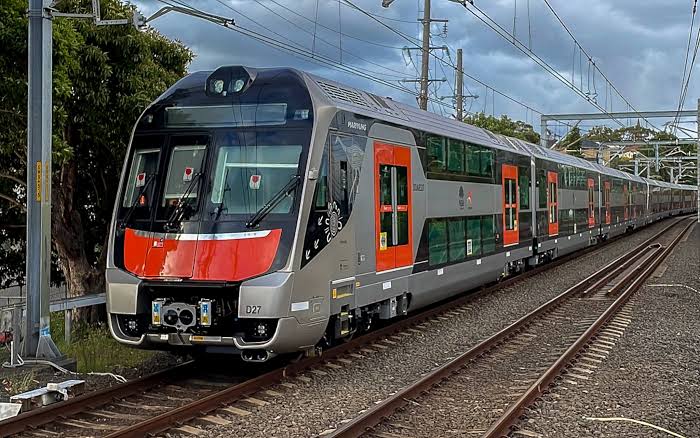
Search “flower train North Sydney” and you are almost certainly one of two people: someone looking for a flower stall near North Sydney station on the way home, or someone who has spotted the tiny florist tucked into a station concourse and wants to know if it is any good.
Both are reasonable. But there is a third option most commuters miss, and it is considerably better than either. This guide covers all three honestly.
The Commuter Reality at North Sydney Station
Flower train North Sydney is one of the busiest stations on the network, feeding a CBD of around 70,000 residents in the local government area plus tens of thousands who come in daily for work and education. It has entrances on Blue Street and Miller Street, and the surrounding streets – Miller, Walker, Mount, Berry – carry the retail and food traffic.
Commuter flower buying happens in a specific window: roughly 4.30pm to 6.30pm, on the walk between the office and the platform. It is convenient. It is also the worst possible time and method to buy flowers, for reasons worth understanding.
Why Station Flowers Struggle
Not a criticism of anyone selling them. It is physics.
Heat and air movement. Station concourses and street-front buckets are hot in summer, and moving air desiccates petals faster than heat alone does. Flowers standing in a concourse all day have already lost days of vase life before you pick them up.
No cool room. Proper cut flower handling requires refrigeration between conditioning and sale. A pop-up bucket display does not have it.
Late-afternoon stock. By 5.30pm you are buying what did not sell that morning.
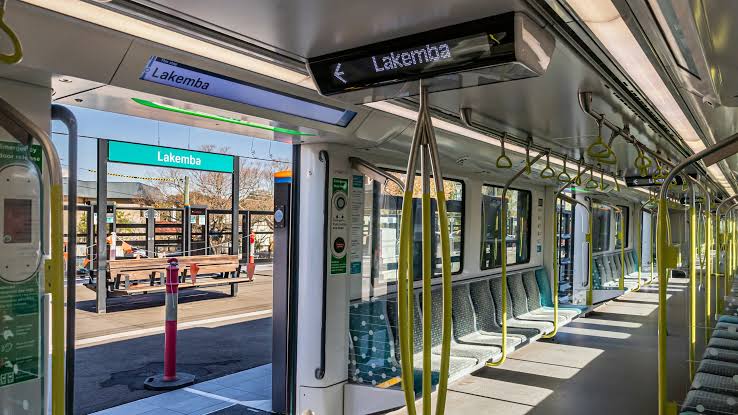
The commute itself. A wrapped bouquet spends 20 to 40 minutes out of water in a packed train carriage, pressed against other people, then walks home. Roses in particular develop air locks in the stem when they sit dry, and the head droops within a day.
The underlying issue is well documented. Australian postharvest research on vase life determinants in cut flowers and foliage found that season of harvest and postharvest handling were the dominant factors in how long stems held, with proper treatment extending vase life roughly 1.4-fold. Time out of water and exposure to heat and air both sit on the wrong side of that equation.
If You Are Buying at the Station Anyway
Sometimes convenience wins. Here is how to buy the best possible version.
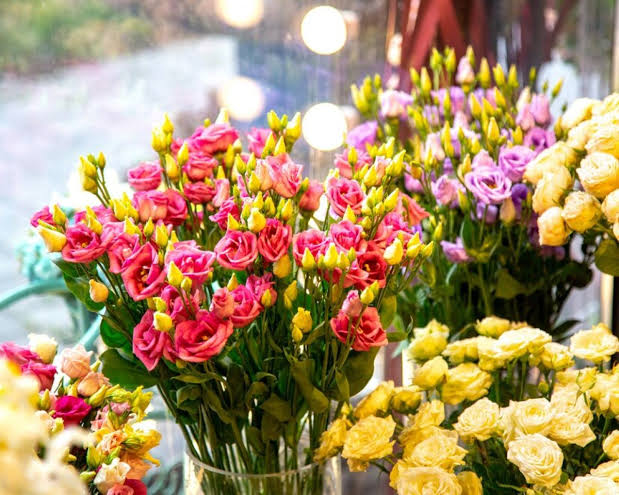
- Buy the toughest things available. Chrysanthemum in the modern antique tones, carnation, alstroemeria, lisianthus, and anything native – banksia, protea, gum foliage, waxflower. All of these will shrug off a commute. Roses, hydrangea, gardenia and sweet pea will not.
- Buy tight buds, not open flowers. Open blooms have nothing left to give.
- Check the stem ends. Firm and pale is right. Brown, soft or slimy means it has been standing in fouled water.
- Check the foliage. Yellowing leaves mean age or heat stress.
- Ask for a water sleeve if there is one going.
- Get them into water within the hour. Recut 2cm at 45 degrees the moment you are home.
- Avoid Friday evening stock unless it is visibly fresh. That is the end of the week’s buying.
The Better Option Nobody Uses
Here is the actual answer.
Set up a standing order and have it delivered.
A standing order is a recurring delivery – weekly or fortnightly – where you set a budget and a real florist buys whatever was best at the Flemington market that morning. No choosing, no carrying, no commute damage, no thinking about it.
It is comfortably the best value in the industry, because the florist buys volume against known orders rather than speculating. The per-delivery value is materially better than one-off buying, and the flowers arrive conditioned, hydrated and never having been on a train.
For a North Sydney household this is the obvious move. Flowers arrive at the house on a Thursday, already in water, already properly cut. You do not carry anything. The cost per week is often less than a rushed station bunch.
And if the point is to arrive home with flowers rather than to have flowers at home: order them delivered to the house that afternoon, and walk in behind them. Same effect, better flowers.
Delivery Around North Sydney
North Sydney sits in the middle of the core lower North Shore delivery ring, which makes it one of the easiest addresses in the city.
Same-day, around 1pm weekday cut-off: North Sydney, Milsons Point, Kirribilli, Lavender Bay, McMahons Point, Waverton, Wollstonecraft, Crows Nest, Cammeray, Neutral Bay, Cremorne, Cremorne Point, Kurraba Point, Mosman.
Same-day, 11am to midday: St Leonards, Naremburn, Artarmon, Northbridge, Willoughby, Chatswood, Lane Cove, Greenwich, Riverview, Longueville, Roseville, Manly, Seaforth.
Same-day, 10am to 11am: Hunters Hill, Woolwich, Huntleys Cove, Huntleys Point, Gladesville, West Pymble, Clontarf, Balgowlah Heights, Allambie Heights.
Saturdays are earlier, usually 10am. For office delivery, book before 3pm – North Sydney reception desks empty out early and a bouquet locked in a lobby overnight is a wasted gesture.
What to Buy by Season
Spring (Sep-Nov): ranunculus, tulip, stock, sweet pea, freesia, garden roses, blossom branches. Peonies for a brief window in October and November. The best-value quarter of the year for volume.
Summer (Dec-Feb): hydrangea, dahlia, lisianthus, agapanthus, gardenia, orchid. Take morning delivery and ask for heat-tolerant stems. This is the worst season to carry flowers home on a train.
Autumn (Mar-May): chrysanthemum in modern antique tones, dahlia, protea, banksia, celosia, berried and rust-toned foliage. Outstanding value and the longest vase life of the year.
Winter (Jun-Aug): anemone, hellebore, magnolia branch, camellia, wattle, waratah. A single flowering branch in a tall vessel is dramatic and lasts, and it survives a commute better than almost anything.
Ask for “designer’s choice, in season, this is my budget” and you will consistently get more flowers and better ones than picking from a fixed catalogue. Fixed products force a florist to buy named varieties whatever the market did that morning; a free brief lets them buy what was genuinely good.
Where North Sydney’s Flowers Come From
Most of what you buy here is grown within a few hours of the city. NSW has a substantial commercial cut flower industry, with traditional flowers concentrated around the Sydney basin, the Hills District and the Central Coast, plus a significant native and wildflower sector along the coastal strip. The state’s horticulture and primary industries resources set out how the sector is organised and note that most local production sells through the Sydney flower market.
Locally grown stems reach the market hours after cutting rather than days after air freight, which is the main reason they last longer. Ask your florist where the flowers came from. A good one answers immediately.
North Sydney: Parks, Events and Local Context
Worth knowing if you are buying for something rather than just for the bench.
North Sydney has an unusually dense reserve network for a CBD – St Leonards Park (including North Sydney
Oval), Bradfield Park under the bridge, Ted Mack Civic Park, Green Park, Kesterton Park, Milson Park, Anderson Park and the Lavender Bay Parklands including Wendy Whiteley’s Secret Garden. Several are Crown land managed by Council under plans of management.
If you are planning a ceremony, memorial or gathering in any of them, check the terms before you design. The parks and recreation facility information sets out hire conditions, access windows and what may or may not be installed on site – including rules on pegs, adhesives and open flame. Those conditions will reshape a floral plan before your mood board does.
The North Sydney CBD also generates substantial corporate flower work – reception arrangements, client gifting, staff milestones – and any established local workroom will run monthly-invoiced accounts for it.
Making Them Last
- Recut stems 2cm at a 45-degree angle with sharp blades, immediately on arrival.
- Wash the vase in hot soapy water and scrub it. Bacteria kills more bouquets than thirst does.
- Strip every leaf that would sit below the waterline.
- Use the flower food sachet and dissolve it fully.
- Change the water completely every second day and recut.
- Keep the vase away from the fruit bowl – ethylene from ripening fruit ages a bouquet overnight.
- Out of the afternoon western sun; cooler room overnight in summer.
- If a rose head has drooped after a commute, cut the stem long on an angle and stand it in an inch of justboiled water for a minute to clear the air lock, then return it to deep cool water. It usually revives completely.
The Bottom Line
If you are looking for the flower train North Sydney option, the honest answer is that station-adjacent buckets are convenient and hard on flowers – no cool room, all-day heat and air, then twenty minutes in a packed carriage. If you buy there, buy natives, chrysanthemum or carnation and get them into water within the hour. But the better move is a standing weekly or fortnightly order delivered to the house: better flowers, better value, properly conditioned, and you walk home carrying nothing.